



What happens, and when.
- Week 1
Free site survey
An engineer visits, checks your roof, shade, wiring and the last few bills, and answers every question.
- Week 1
Design & quotation
A roof layout with expected generation, savings, subsidy and a clear, all-inclusive price.
- Week 1–2
Subsidy registration
We register you on the PM Surya Ghar portal and apply for net metering with your electricity company.
- 1–2 days
Installation
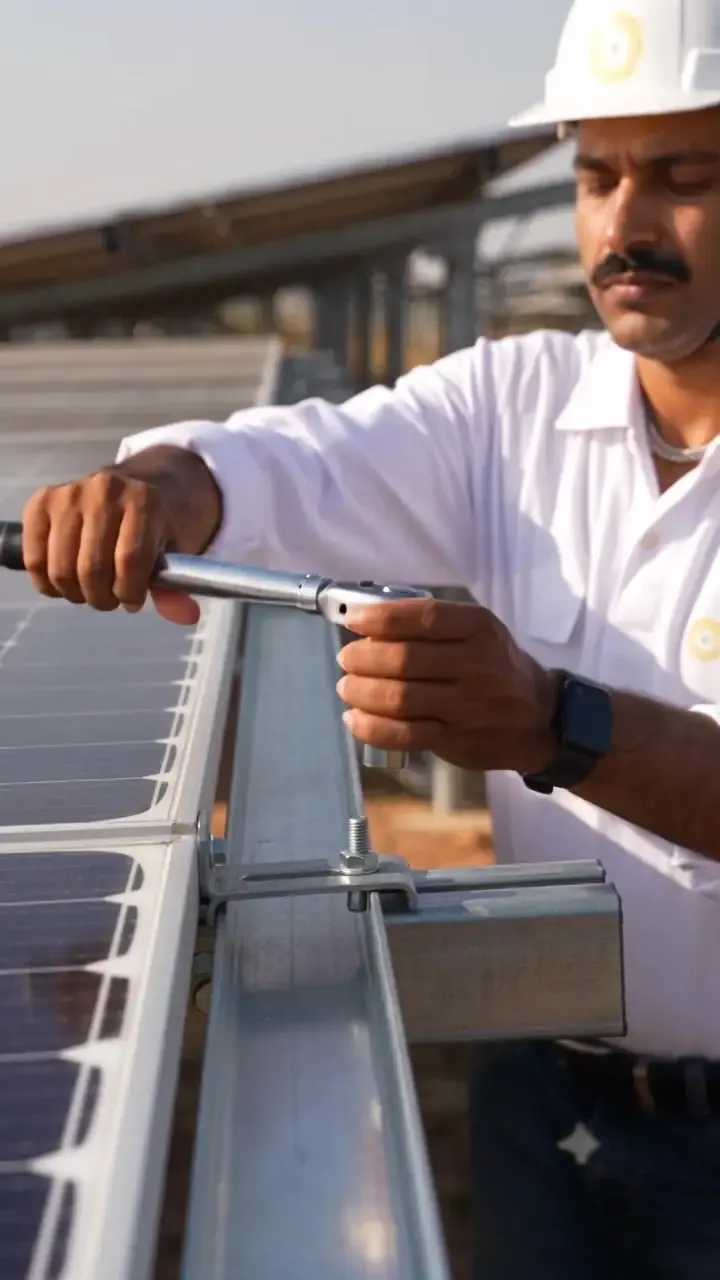
Structure, panels, inverter, earthing and wiring, installed and tested by our own team.
- Week 3–5
Inspection & net meter
The electricity company inspects the plant and fits the net meter. We coordinate every visit.
- After commissioning
Switch-on & subsidy
Your plant starts saving. We upload the commissioning report and follow the subsidy until it reaches your bank.
- For life
25 years of care
Service visits, warranty claims and monitoring through one number and the RAVC customer portal.

Your meter runs both ways.
In the afternoon your roof usually makes more than you use. The net meter sends that surplus to the grid and records it. At the end of the month you pay only for the difference.


Installed by our own engineers.
No sub-contracted strangers on your roof. Trained RAVC teams follow the same checklist on every job.
Before you start
Does solar work in the monsoon?
Yes. Panels make power from daylight, so cloudy days drop to roughly 20–40% of normal output, not zero. The sunny months more than make up for it across the year.
How much roof space do I need?
About 10–12 square metres (100–120 sq ft) of shadow-free roof for every kW. A 3 kW home system needs roughly 30–36 m², and an elevated structure keeps your terrace usable underneath.
How long does installation take?
The installation itself usually takes one to two days for a home. From survey to switching on, including design and the net-metering approval, most homes are running within three to six weeks.
What is net metering?
A net meter records the power you send to the grid as well as what you take. At the end of the billing cycle you pay only for the difference, so the extra units your roof makes in the afternoon reduce your bill.
Will solar work during a power cut?
A standard on-grid system switches off during a power cut for safety. If you want backup, ask for a hybrid system with batteries.

Book your free site survey.
It takes about an hour and there is no obligation.